Advice Hotline from 8:00 am - 5:00 pm: +49 (0) 9371 940 0
Advice Hotline from
8:00 am - 5:00 pm: +49 (0) 9371 940 0

Biological silage inoculant for the treatment of silage. Premium product for best silages.

Product advantages:

  • Smart combination of different homofermentative bacteria strains with highly effective enzymes
  • Approved for organic farms
  • DLG-tested (1b, 1c, 4b, 4c milk)
  • TURBO-Effect - immediate performance through strong and rapid acidification
    of the silage material

Your benefits:

  • High inoculation rate of homofermentative lactic acid bacteria
  • Enzymes to enhance the degradation of structural fibre fractions
  • Ideal for grassland as well as legumes and clover-grass mixtures
  • Unlocking greater milk yield potential from the forage base

Packaging size: 25 kg


Your benefits at a glance:

  • High inoculation rate of homofermentative lactic acid bacteria
  • Enzymes to enhance the degradation of structural fibre fractions
  • ideal for grassland as well as legumes and clover-grass mixtures
  • Unlocking greater milk yield potential from the forage base
No feeding recommendation available.

You may be interested in this as well

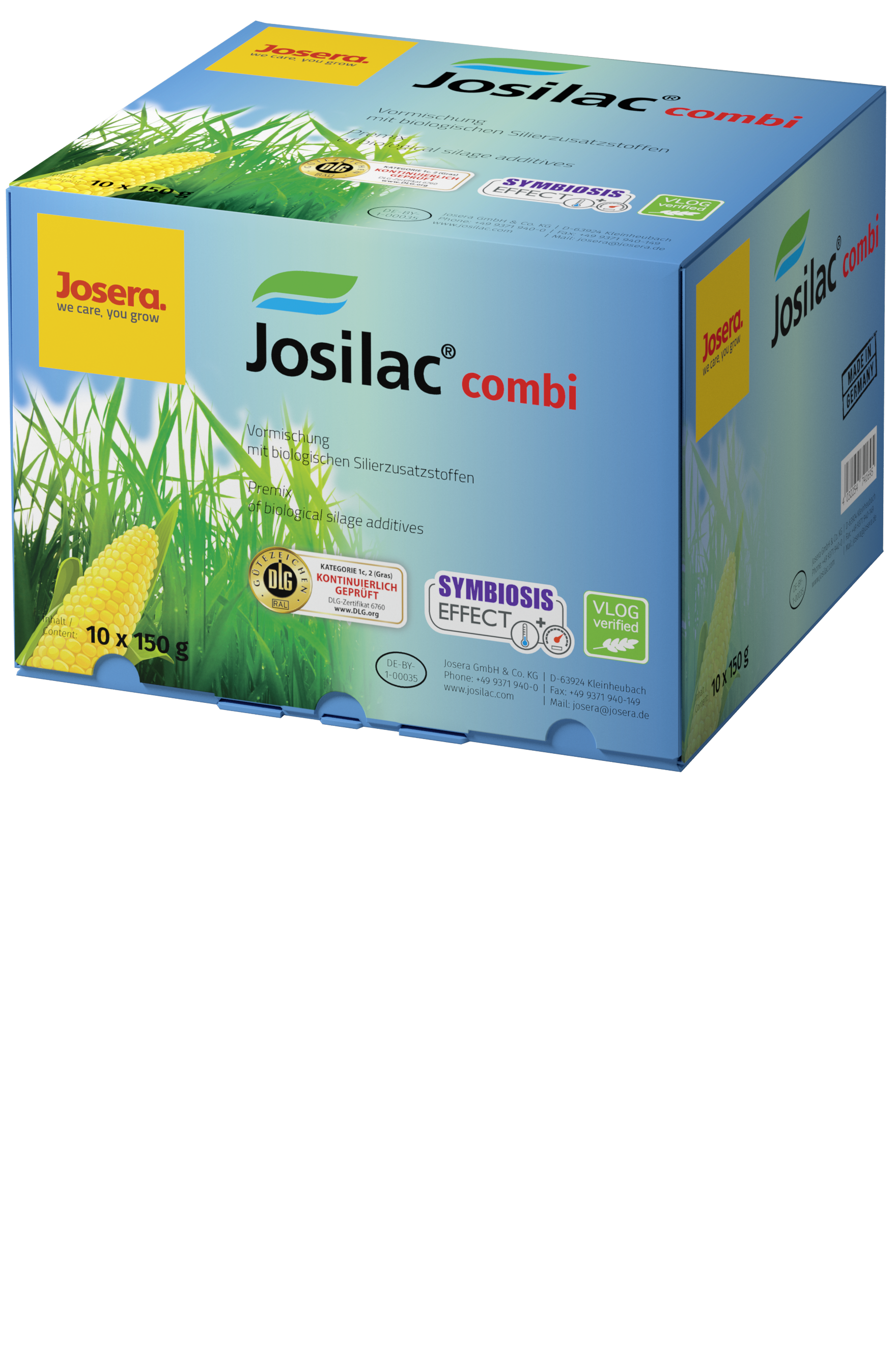
Josilac® combi

Josilac® combi

Biological silage inoculant The all-rounder with a wide range of applications: silage maize, whole crop silage, and green forage with a high dry ma...

  • universal application
  • low application rates (usable for ultra-low-volume [ULV]) and liquid application
  • wide range of application (dry matter 28-45 %)
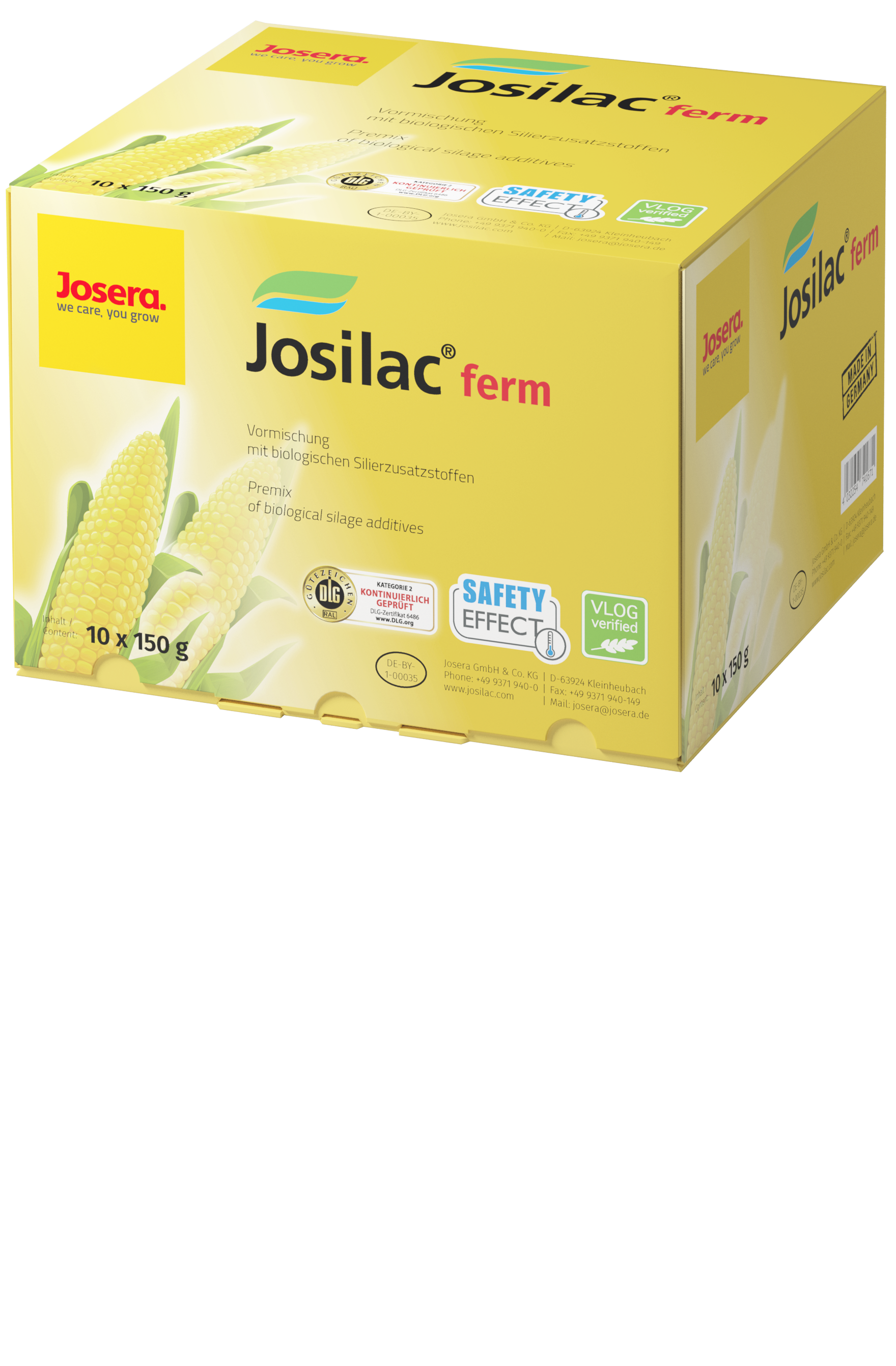
Josilac® ferm

Josilac® ferm

JOSERA Josilac ferm is the specialist for maize silage among our organic silage additives.

  • Fresh, cool forage due to protection against reheating
  • Preserves feed value by controlling yeast and mould growth
  • Reduced feed losses through high aerobic stability

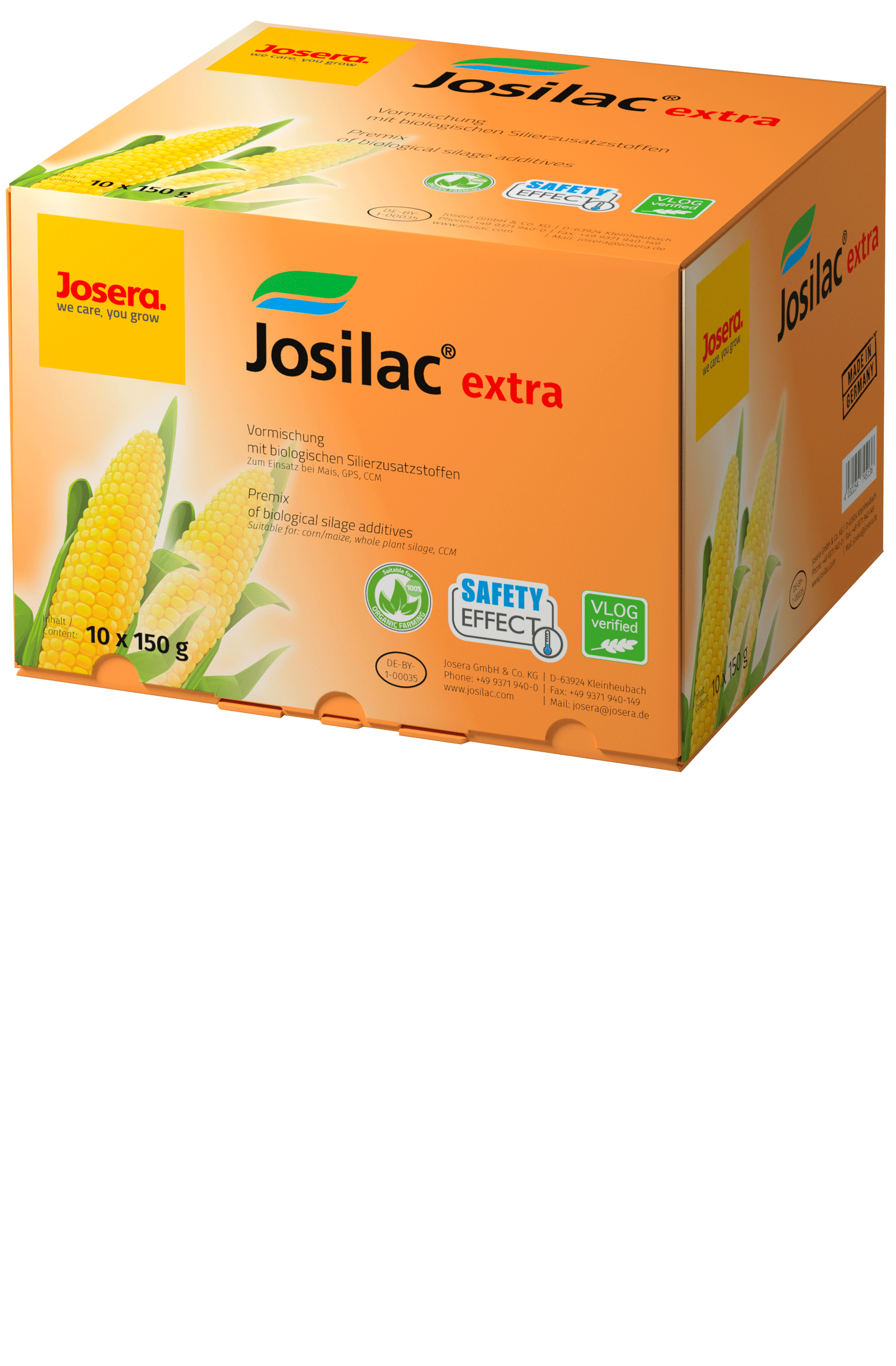
Josilac® extra

Josilac® extra

Biological silage inoculant. The specialist against secondary heating and mould formation for maize silage, CCM, whole crop silage, and pasture gra...

  • Exclusive combination of two heterofermentative bacteria strains
  • Fresh, cool forage due to protection against reheating • low feed loss
  • Reduced feed loss due to high aerobic stability