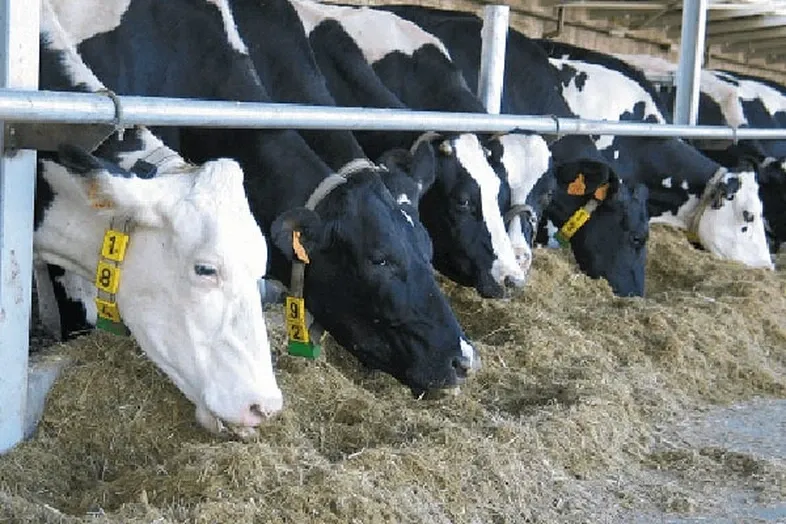
GMO-free dairy cow feeding
The “Without Genetic Engineering” seal was introduced by the German government in 2009 and is intended to provide consumers with guidance on the matter.
Since June 2010, Austria’s dairies have only been processing GMO-free milk and this trend is also gaining momentum in Germany. The number of dairies that rely on milk without genetic engineering is increasing:
Friesland Campina, Berchtesgadener Land, Breisgaumilch and Allgäuland are just a few examples. Bauer, Ehrmann, Humana and Zott are also in the planning stage.

What possibilities are there and what needs to be taken into account?
Dairies are also reacting to the demands of the food retail trade. Since July 2016, Lidl has been placing the “Without Genetic Engineering” label on its own-brand milk. REWE and ALDI Süd are also wrestling with GMO-free dairy products to win over consumers. More than half of consumers report in surveys that “Without Genetic Engineering” is an important quality criterion for food. People who do value this, spend 44% more per purchase than others.
The requirements of the food retail trade not only put dairies under pressure, but also place milk producers under pressure. A farmer therefore needs a certificate for a large number of animal feedstuffs. In addition, certain feedstuffs, such as GMO soybean extraction meal from abroad, can no longer be used. About 80% of soybean cultivation for the world market takes place in the USA, Brazil and Argentina where a large proportion of cultivated soy plants is genetically modified. Due to additional costs for separation and analysis, GMO-free soy is sometimes more than €10/dt more expensive, depending on the market situation.
Those who nevertheless want to feed their cows GMO-free in a cost-effectively and safe manner, must therefore think about alternatives.
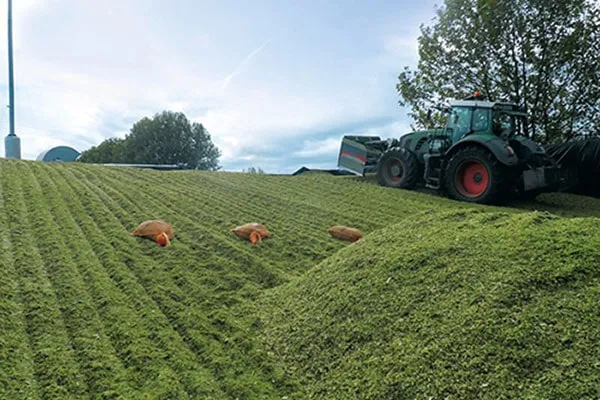
The farm’s own basic feed such as grass and maize silage can be produced safely without genetic engineering. This also applies to carbohydrate carriers, such as cereals and molasses pulp that form part of the ration.
More problematic in this respect, however, are protein carriers. Soya, of which more than 90% is imported from the USA and Brazil, is mostly declared as being genetically modified. This means that despite being of high quality in terms of feed value, the meal cannot be used in GMO-free milk production.
The obvious solution is to design a mixture individual to the form, which does not include soya.
What do we have to watch out for?
In terms of the farm,
- Which feeds are already available to me on the farm?
- Which crops can I include in future crop rotations in order to be able to use my own protein?
Legumes are considered well suited to this. As nitrogen collectors, they also have a high preceding crop value.
In terms of additional purchases,
- Which feed does the market offer and under what conditions?
It is important to always request the current feed values when requesting offers from the trade!
| Animal feedstuff | Crude protein | Energy |
|---|---|---|
| Additional purchase possible | ||
| Spent grain | 250 | 6.7 |
| Rapeseed meal Coarse meal | 400 | 7.3 |
| Rapeseed expeller | 350 | 8.6 |
| Urea | 2870 | Without Energy |
| Maize gluten feed | 260 | 7.7 |
| Protigrain | 315 | 7.3 |
| Own production to date | ||
| Broad and field beans | 300 | 8.6 |
| Peas | 250 | 8.5 |
| Grass silage | 184 | 6.2 |
| Own production in the future | ||
| Clover-grass silage | 209 | 6.7 |
| Lucerne silage | 220 | 5.2 |
| Dried lupin seeds | 345 | 8.8 |
| Source: Own presentation based on Dr. Thomas Jilg, “Alternatives to genetically modified protein carriers in dairy cattle feeding” and Thomas Bonsels, Angela Mögel “High performance without genetic engineering” top agrar 1/2012, R 20/ 21 |
| Animal feedstuff | Kg Dry mass / animnal/ day |
|---|---|
| Grass silage | 4 |
| Lucerne silage | 2 |
| Maize silage | 8 |
| Pressed pulp silage | 2 |
| Rapeseed meal | 1 |
| Protigrain | 1.5 |
| Barley | 2 |
| Grain maize | 2 |
| Rumi N | 0.1 |
| DairyPilot | 0.1 |
| Miramin | 0.25 |
| Ration characteristics | |
| Kg dry substance/cow | 22.95 |
| NEL (MJ/kg DM) | 6.84 |
| Useful crude protein (g/kg dry mass) | 16.2 |
| RNB (g) | 30 |
| Crude fibre (% in dry mass) | 17 |
| Sugar + Starch (% in dry mass) | 26 |
| Milk from energy (litres) | 36.3 |
| Milk from usable protein (litres) | 36.7 |
| Source: Own calculations |
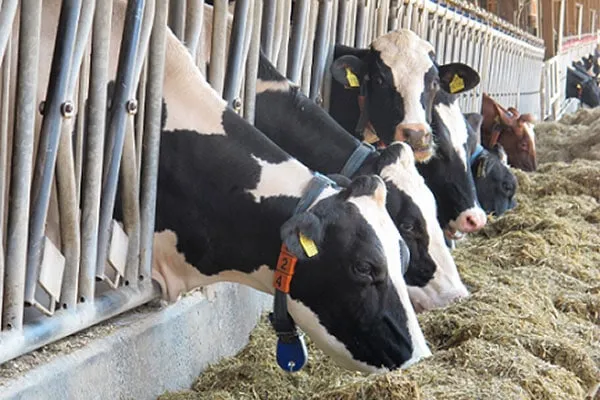
| Ration component | Ration 1 Miramin (2% P)(kg) Ration 2 Miracal (0% P)(kg) | |
|---|---|---|
| Grass silage 1 Step | 20.0 | |
| Maize silage 35 dry substance 330 starch | 20.0 | |
| Rapeseed meal 00 | 2.0 | |
| Protected rapeseed | 0.5 | |
| Grain maize | 1.4 | |
| Wheat meal | 1.4 | |
| Barley meal | 1.4 | |
| Milk performance feed 20/4 | 2.0 | |
| Miramin | 0.3 | |
| MiraCal | 0.3 | |
| DairyPilot | 0.1 | |
| Feed grade urea | 0.05 | |
| Sum | 49.15 |
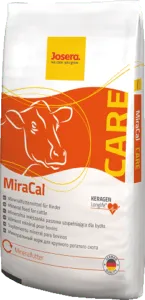
An appropriate mineral food without phosphorus can at least provide some release here. JOSERA MiraCal – Keragen Longlife therefore closes the gap in rations with phosphorus-rich feed components, thus guaranteeing the JOSERA All-in-One concept.
Please contact your JOSERA representative for more information.