The development of the initially functionless rumen and the microbial activity of the rumen flora are significantly influenced by the solid food intake. Care must be taken to ensure that the ratio of roughage and concentrated feed is in line with requirements. The structural effect of roughage promotes rumen motor function and stimulates growth in size. Starch-containing concentrated feed components, on the other hand, influence villi growth in the rumen through increased formation of propionic and butyric acid. In practice, different feeding methods are used, which do not always meet the requirements of the young calf. In addition to the separate presentation of roughage and concentrated feed, in practice one often sees the use of dairy cows’ rations. The former usually does not ensure a sufficient intake of roughage, while milk cows’ rations are not adapted to the calf’s needs.
To create the best conditions for a good development of the calves in the early rearing phase, Calf Dry TMR is a very good solution.
What is Dry Calf TMR?
A Calf Dry TMR is a total mixed ration for calves from chopped hay or straw plus concentrate feed components and mineral feed. Calf TMR is optimally designed to meet the needs of young calves and can be used as the sole solid feed from the first week of life.
Which advantages does Dry Calf TMR have?
Optimal nutrient supply
A Calf TMR is adapted to the calf’s nutritional requirements in the early rearing phase. This ensures an optimal supply of energy, protein, minerals and vitamins.
Controlled feed intake- no selection
The Calf TMR ensures an optimum ratio of concentrate to roughage. The short stalks of roughage prevent selection on the feeding table. This prevents one-sided concentrated feed intake, increases rumination activity and reduces the risk of early rumen acidosis.
Early rumen development
The structure-containing roughage promotes the growth of the rumen through mechanical stimulation of the rumen wall and stimulates the motor function. At the same time, starch-containing concentrated feed components provide volatile fatty acids that stimulate the formation of rumen villi rumen villi.
No digestive disorders due to unstable silages
The use of a Calf TMR reduces the risk of digestive disorders that can occur when using unsuitable silage.
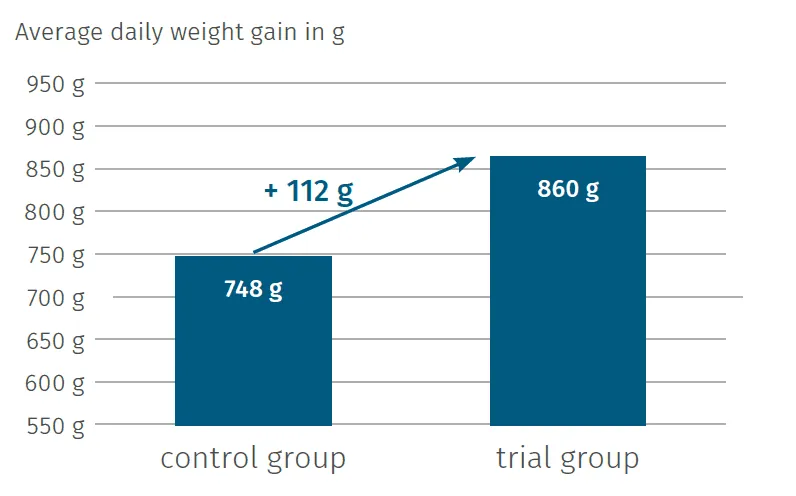
?? Your Physiological advantages at a glance!
- Optimal nutrient supply
- Controlled feed intake- no selection
- Early rumen development
- No digestive disorders to unsable silages
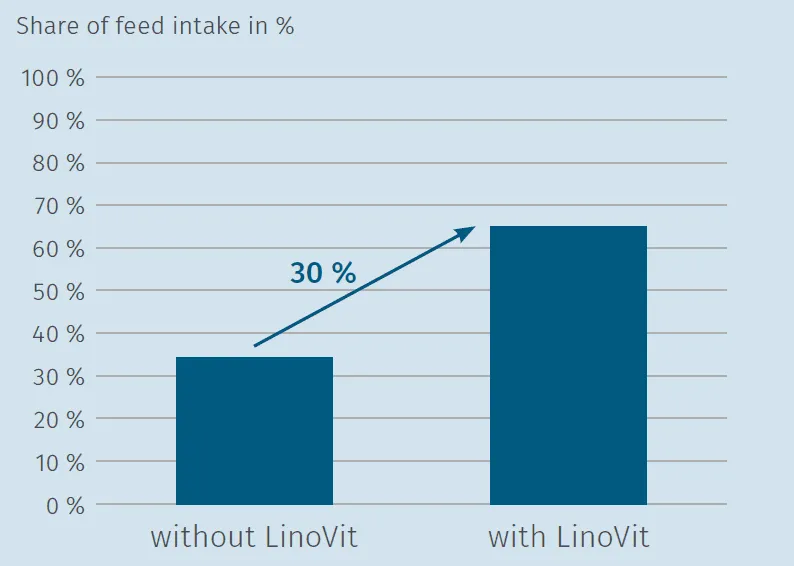
- Increased feed intake
Work economical advantages
Simplified feeding
The feeding pattern is simple and can be easily carried out as ad-libitum-feeding by any worker, even in replacement situations.
Easy storage
Due to the high dry matter content of the feed components, the TMR can be produced on stock. If stored in a dry place, it has a shelf life of 8-12 weeks.
Good feed hygiene on the feeding table
The daily cleaning of the feed table is easier to do due to the high dry matter content.
?? Your economic advantages at a glance!
- Simple production due to few working steps
- Use of existing technology
- High process reliability
- Possible uses of feed materials
- Good storage suitability
- Use from the 1st week of life
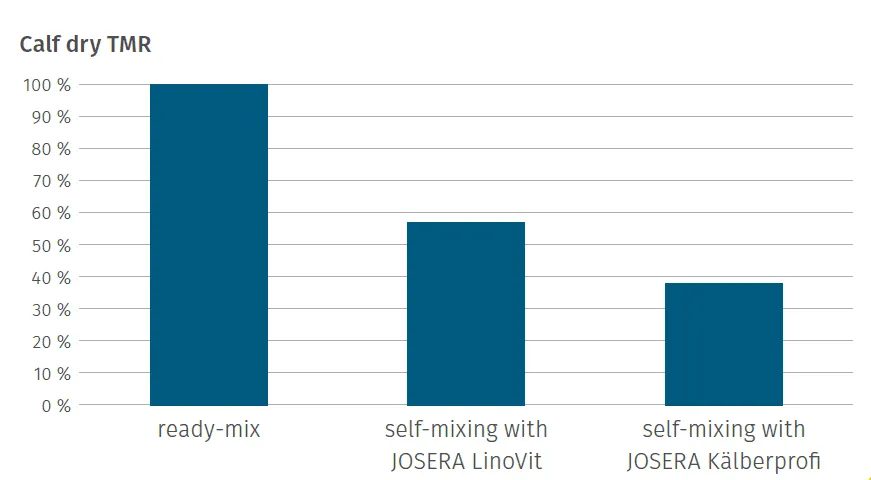
?? Your economic advantages at a glance!
- Lower costs due to earlier weaning and reduced milk replacer feeding duration
- Economical rearing feed
- Reduced working hours required
How is the mixture produced?
The individual components are mixed in the feed mixer. Please ensure that feed residues (silage) are removed beforehand. The mixing sequence must be observed during production:
Step 1:
First, roughage (hay, straw, lucerne) is put into the feed mixer. The roughage is mixed until the stalks are a maximum length of 2-3 cm. The short stalk length minimizes the risk of selection. When choosing roughage, good feed hygiene must be ensured. As an alternative to the farm’s own roughage, it is also possible to purchase de-dusted, chopped straw.
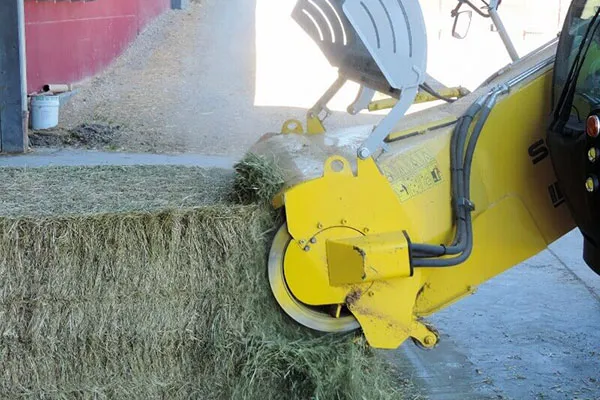
Figures 1–3: JOSERA LinoVit as well as the individual concentrated feed and mineral feed components are gradually added in.
The finished TMR can be stored in big bags, feed bins or on cleaned concrete surfaces for a period of up to 12 weeks. It is important to ensure that the Calf Dry TMR is protected from moisture. For longer storage periods and increased molasses dosages, we recommend to use stabilisers such as JOSERA Frischhaltekonzentrat.
JOSERA products for producing a Calf Dry TMR
For the producing a calf dry TMR either the supplementary feed JOSERA LinoVit or a JOSERA mineral feed, e.g. Kälberprofi, is suitable.
JOSERA LinoVit
JOSERA LinoVit is the ideal supplementary feed, especially for use in Calf TMR. It contains high-quality protein components, vitamins, minerals and health-promoting active ingredients. When using 30% JOSERA LinoVit, there is no need to supplement it further with mineral feed or protein. The selection of raw materials is based on a large number of acceptance tests. Tasty components such as apple pomace stimulate feed intake. Due to its swelling properties, flax supports intestinal peristalsis and provides mucilage that has a positive effect on the intestinal mucosa. The live yeast contained within promotes the development of the rumen flora and increases the feed conversion. Selected herbs and natural polyphenols also support the calves’ health status.
Watch the video to our product LinoVit!
Composition of a calf dry TMR with JOSERA LinoVit and a JOSERA mineral feed, e.g. Kälberprofi, according to requirements:

What should be observed during feeding?
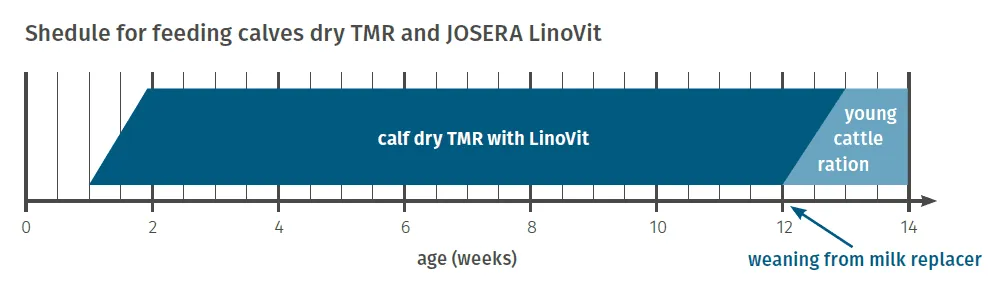
High quality starter such as JOSERA Kälberkost (calf feed) should be provided after the second day, then transition to Dry Calf TMR can be made after week 3 or 4, or once the calves are consuming about 750g Kälberkost per day. The Dry TMR can be provided as complete solid feed over the entire milk-feeding period and continue post-weaning to ease the transition stress from diet changes. To stimulate intake, fresh Calf Starter or Calf Dry TMR should be available and free of flies. Clean, fresh water is also essential to moisten the feed in the rumen, which assists with digestion.
The Calf Dry TMR can be offered to calves from the 1st week of life as the only solid food besides the drinker. It is recommended to use it during the entire drinking period. Even after weaning, the Calf TMR should continue to be offered for a few days to minimise stress due to change and to avoid an energy deficit. When switching to the young cattle ration, we advise to blend the Calf TMR with the young cattle ration at the beginning.

So that on-farm components are used in the correct proportions, it is advisable to have the JOSERA consulting service calculate the mixture of Calf Dry TMR. This ensures that the composition is tailored to the needs of the calves and thus ensures that they have an optimal supply.